
The BA Factory
1924–1929
Construction of the Lochaber aluminium smelter began in 1924 and was completed in 1929.
By the outbreak of the First World War, around 90% of Britain’s aluminium was being produced at the smelters in Foyers and Kinlochleven, with demand increasing rapidly due to military use of the metal.
In response to growing demand, British Aluminium (BA) received permission in 1921 to build a new smelter at Lochaber, north-east of Fort William. A new village, Inverlochy, was developed to house workers and their families. Aluminium production at Lochaber officially began in 1929.
1934
The Laggan Dam was completed, forming a key part of the hydro-electric system that powered the smelter.
1940 – Wartime Bombing
On 20 December 1940, the smelter was targeted during a low-level air raid by a German JU88 aircraft. Two 500kg bombs were dropped on the factory site, but neither exploded. The unexploded bomb remains an important part of the smelter’s wartime history.
1943 – Spey Tunnel Construction
Construction began on the Spey Tunnel project, designed to increase the water catchment feeding the hydro-electric scheme.
The completed tunnel diverted the headwaters of the River Spey, via Loch Crunachan and a two-mile man-made tunnel, into Loch Laggan, significantly expanding the system’s generating capacity.
1958
Lochaber continued to expand throughout the post-war years. In 1958, British Aluminium was taken over by the American company Reynolds Metals, although the BA name was retained.
1981
Following major modernisation works and tunnel repairs, the smelter was upgraded to AP18™ technology. Production capacity increased to approximately 48,000 tonnes per year.
1982
British Aluminium merged with the Canadian company Alcan Inc., becoming British Alcan Ltd.
The company was later sold to investors in 1996. While the smelters at Foyers and Kinlochleven eventually closed, Lochaber survived and remains the last aluminium smelter in the United Kingdom — the final link to a once significant part of Scotland’s industrial heritage.
2000
The Kinlochleven Smelter closed, although the hydro-electric powerhouse remains operational.
2009–2011
A US$70 million upgrade converted the hydro station generators from DC to AC power, increasing installed generating capacity to 100MW.
2012
The Alcan Lynemouth Aluminium Smelter ceased production in March 2012, leaving Lochaber as the last remaining aluminium smelter in the UK.
2016
The Lochaber operation was acquired by the GFG Alliance. Following the acquisition, Liberty British Aluminium (now ALVANCE), SIMEC Lochaber Hydropower, and JAHAMA Highland Estates were established.
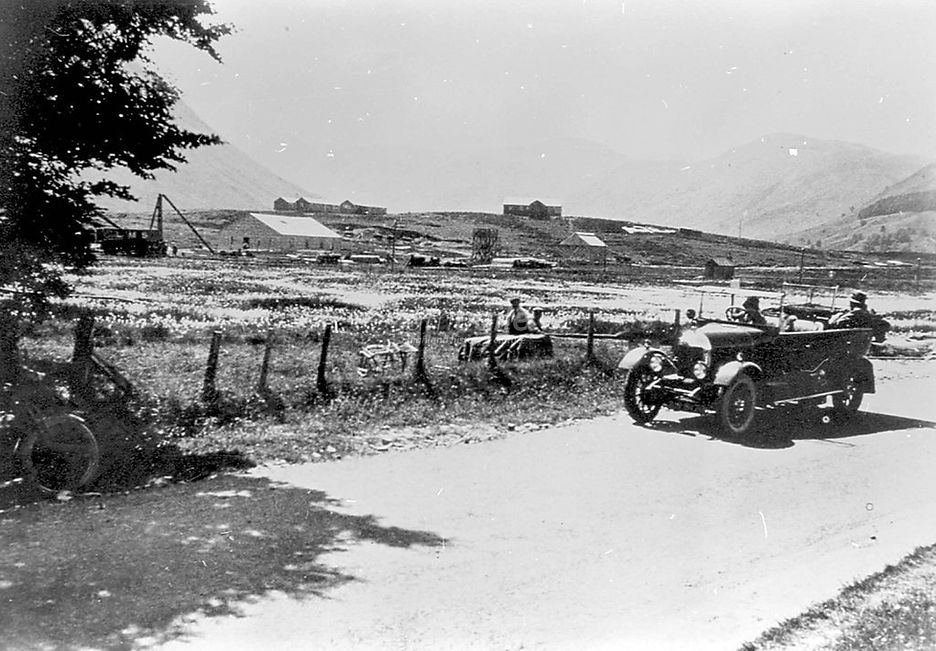
Factory being built c1924


River Lochy in 1925 shortly after the start of the construction of the BA Factory which opened in 1929. Photo Credit - John Cameron


BA and Lochy Bridge c1949


The BA Club photo credit Ronnie Macdonald
The Narrow Gauge Railway
The Lochaber Narrow Gauge Railway was a 3 ft industrial railway built during the 1920s to support construction of the Lochaber hydro-electric scheme and aluminium smelter near Fort William.
Nicknamed the “Old Puggy Line”, the railway carried workers, equipment and materials across remote Highland terrain while a 15-mile tunnel was excavated from Loch Treig to the smelter. The tunnel supplied water to generate hydro-electric power for aluminium production by British Aluminium.
Construction of the railway began alongside the Lochaber scheme after approval was granted under the Lochaber Water Power Act of 1921. The line connected the factory site at Fort William with tunnel adits, shafts and construction camps deep into the hills. A separate pier railway linked the works to Loch Linnhe, allowing materials to arrive by ship.
The railway crossed difficult terrain including peat bogs, steep gradients and deep ravines, with many timber trestle bridges built along the route. Smaller internal railways were also used inside the tunnel itself to remove spoil and transport materials during construction.
Although originally intended as a temporary works railway, much of the system remained in use after completion of the hydro scheme for maintenance and transport purposes. The Upper Works Railway eventually extended around 19 miles from Fort William to Loch Treig.
Storm damage in 1971 badly affected part of the route and, as new access roads were developed, the railway gradually became uneconomic to repair. Operations finally ended in 1977.
Today, most of the track has been removed, although several bridges and small sections of railway infrastructure still survive in the landscape, remaining an important part of Lochaber’s industrial heritage.
What Remains of the Puggy line Link 1
Also a special recoloured and black and white collection of
The Puggy Line on the below link.
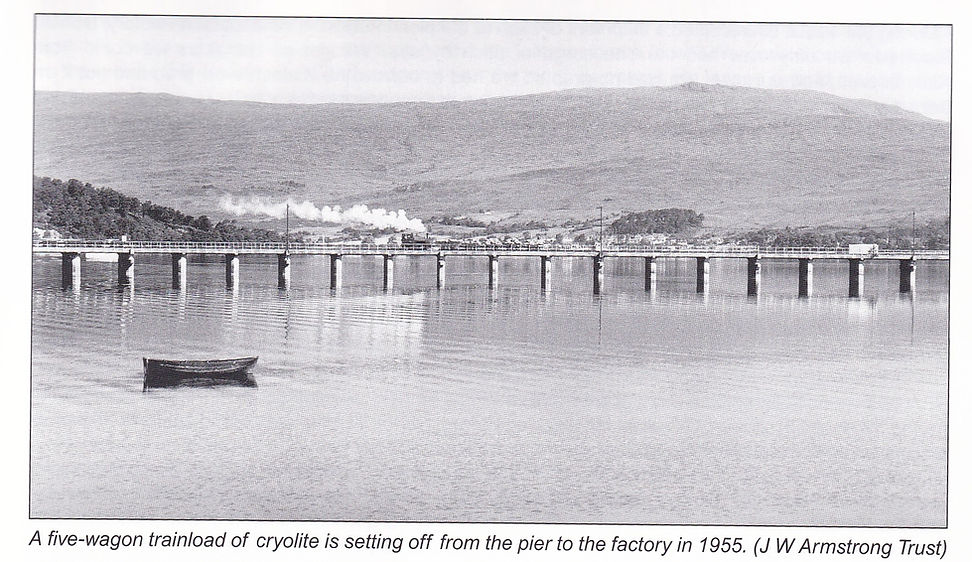


train on the town pier c1954 photo credit john cameron
